
Messaging Works: A Guide to Effective Medical Recruitment Outreach

In medical recruitment, reaching the right candidate is only half the battle. The other half is saying the right thing in the right way.
Even the most precisely targeted outreach campaign will fall flat if the message doesn’t resonate. Today’s healthcare candidates expect communication that feels relevant, personal, and worth their time - not generic mass promotion.
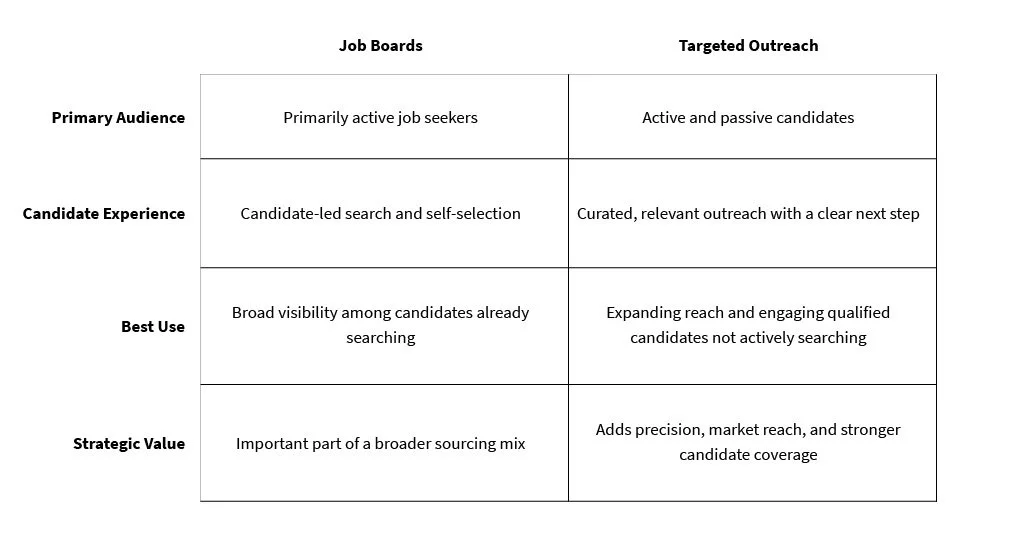
The strongest recruitment strategies do not rely solely on job boards. They are designed to reach both active and passive candidates through targeted, relevant outreach that aligns with candidate interests and reduces friction in the decision-making process.
To build awareness for your organization and attract active and passive candidates, your messaging must be as strategic as your data. This guide outlines the principles of effective outreach and how to apply them.
What Makes Medical Recruitment Outreach Effective?
Effective outreach isn’t just about what you say. It’s about how, when, and to whom you say it.
A message to a final-year resident will land very differently than one sent to a tenured physician. Understanding these differences - and tailoring outreach accordingly - separates high-performing campaigns from those that go ignored.
At its core, successful recruitment outreach is built on four principles:
Knowing your audience
Speaking directly to candidate specialties and needs
Keeping content concise and actionable
Including a clear, compelling call to action
When executed well, these principles turn outreach into a powerful pipeline-building tool.

Why Effective Recruitment Must Reach Both Active and Passive Candidates
A common limitation in recruitment marketing is relying too heavily on channels that primarily capture candidates already in the market. Job boards can play an important role in attracting active job seekers, but they represent only one portion of the available talent pool.
The most effective strategies combine broad visibility with targeted outreach so organizations can engage both active and passive candidates more effectively.
1. Relevance > Volume
1:1 Outreach: Tailored to specialty, experience, geography, or career stage
Job boards: Require candidates to sort through irrelevant roles
Impact: Candidates engage when the message clearly answers “Why me?” without effort.
2. Reduced Cognitive Load
A curated role (or a few options) is quick to assess
A job board introduces too many choices, increasing drop-off
Impact: The easier you make the next step, the higher the conversion.
3. Perceived Value & Exclusivity
Personalized messaging signals: “You were selected”
Mass emails signal: “You’re one of many”
Impact: Perceived exclusivity increases response rates.
4. Trust & Human Connection
1:1 emails feel conversational and authentic
Generic campaigns feel automated
Impact: Candidates respond to people, not platforms.
5. Clear Call to Action
Personalized outreach: “Would you be open to a 10-minute conversation?”
Job boards: “Browse and apply”
Impact: Specific next steps outperform open-ended exploration.
6. Timing & Context
1:1 Outreach can be triggered by milestones (job changes, certification, tenure)
Generic emails are sent without context
Impact: Timely, relevant outreach can improve engagement by reaching candidates when an opportunity is most meaningful.

Candidate Market Coverage Snapshot
Key Considerations for Crafting Outreach
Tailor Your Message to Your Audience
One-size-fits-all messaging doesn’t work, especially in healthcare.
Residents/fellows: Focus on mentorship, growth, and career launch
Experienced physicians: Emphasize environment, compensation, and lifestyle
Tailored messaging isn’t just better, it’s expected.
Address Specific Needs and Pain Points
Healthcare professionals are balancing demanding schedules and major career decisions.
Your message should clearly answer:
“How does this opportunity improve my professional or personal life?”
Examples of value:
Flexible scheduling
Strong support staff
Competitive compensation
Research or leadership opportunities
The clearer the value, the stronger the response.
Keep Content Concise and Skimmable
Your audience is busy. Make it easy to engage:
Use short paragraphs
Include bullet points
Highlight key details early (specialty, location, highlights)
Personalization enhances skimmability. When candidates immediately see relevance, they’re more likely to continue reading.

Substance Still Matters
While brevity is important, specificity builds trust.
Include:
Practice details
Schedule expectations
Compensation structure
Community highlights
A focused, well-structured message is often more effective than longer, generic content.
Speak to Candidates About Their Specialties
Generic language doesn’t differentiate your organization.
Effective outreach demonstrates:
Understanding of their clinical focus
Awareness of their patient population
Knowledge of their practice environment
This level of relevance builds credibility and engagement.
Messaging That Leads the Way
One of the most effective formats in medical recruitment is peer-driven outreach, such as medical director messaging.
These messages:
Come from a recognizable clinical leader.
Provide authentic insight into the role.
Create a sense of professional connection.
Result: This approach can build trust and encourage stronger response.

Setting Clear Objectives
Every outreach campaign should have a defined purpose:
Awareness: Introduce your organization
Engagement: Build relationships
Conversion: Drive action (apply, schedule, connect)
Retention: Nurture ongoing candidate interest
Clear goals ensure your messaging is structured for measurable success.
Link Strategy Matters
Too many links can hurt deliverability and overwhelm candidates.
Best practices:
Limit to 1–3 links
Prioritize a single primary action.
Avoid excessive redirects or link shorteners.
Remember: more links = more friction.

Crafting a Strong Call to Action
Your CTA is where interest turns into a clear next step.
High-performing CTAs are:
Specific
Simple
Aligned with candidate expectations
Example:
“Would you be open to a quick 10-minute conversation about this role?”
Avoid vague instructions like “Click here” or “Learn more.”
Measuring Performance
Track what matters:
Engagement rates
Response rates
Conversion rates
If performance lags, adjust quickly, especially messaging relevance and CTA clarity.

Conclusion
In medical recruitment, targeting gets you in front of the right candidate. Strategy determines how much of the candidate market you actually reach.
The most effective campaigns:
Do not rely solely on job boards; combine broad visibility with targeted outreach.
Reduce the effort for the candidate.
Clearly communicate value
Guide action with a specific next step
Bottom line:
The strongest recruitment strategies do not rely solely on job boards. They are designed to reach both active and passive candidates through targeted, relevant outreach.
Get Started Now
Ready to strengthen your medical recruitment outreach?
Contact MMS today to learn how our data solutions and recruitment expertise can help you attract top healthcare talent, build your candidate pipeline, and achieve meaningful results.